Based in Ichinomiya City, Aichi Prefecture, NPO ToriCote (hereafter “ToriCote”) promotes arts and culture, supports families and children, and develops international exchange programs.
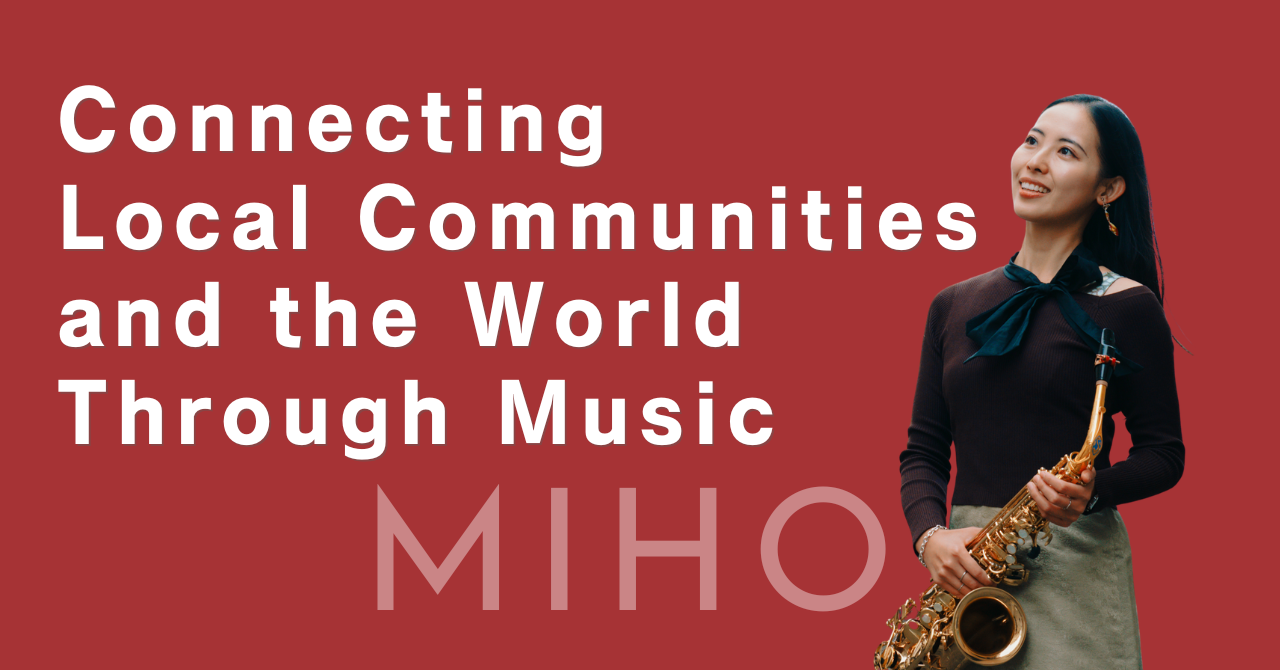
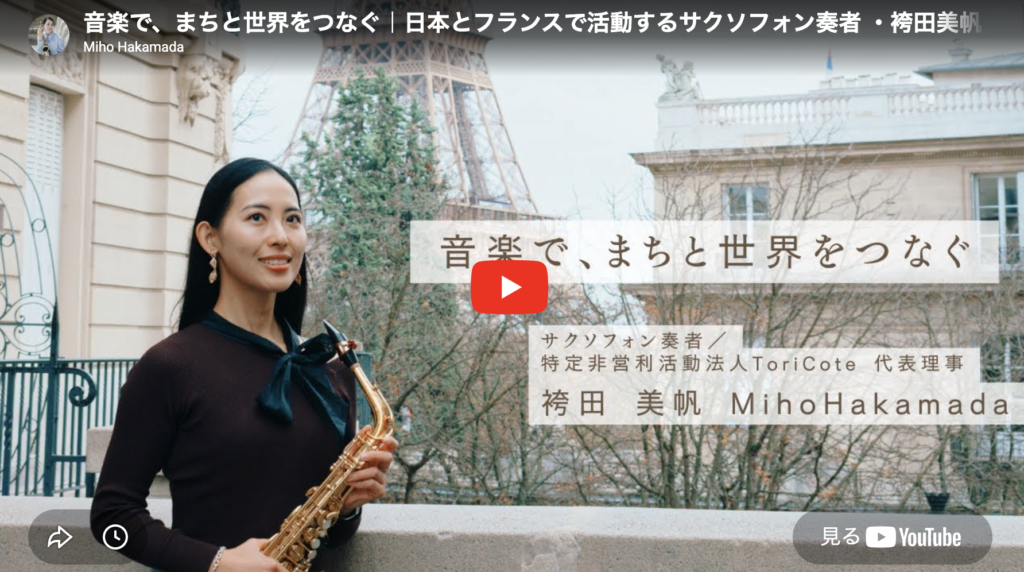
Leading the organization is saxophonist Miho Hakamada.
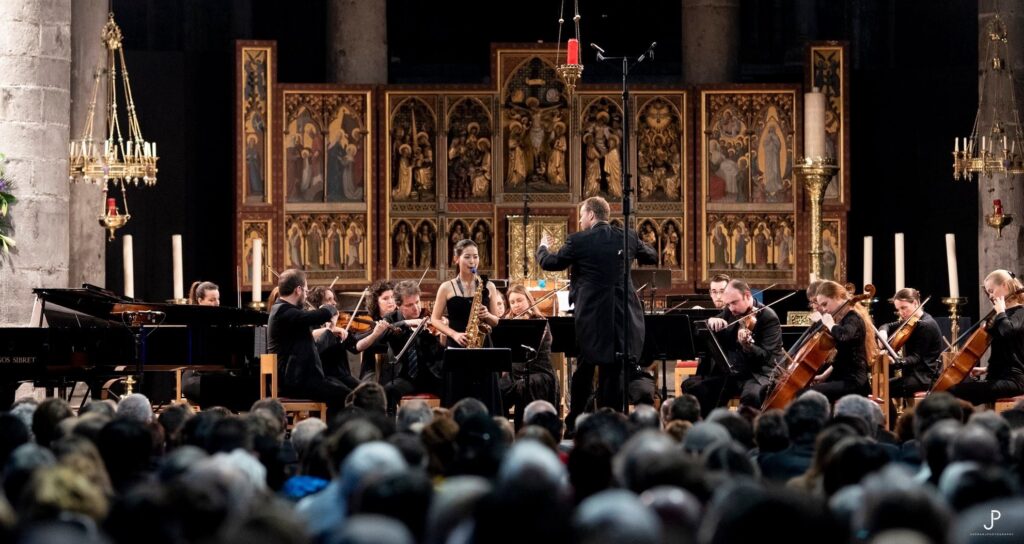
Hakamada spent approximately eight years studying music in Paris, France, and has performed internationally as a professional saxophonist.
Since returning to Japan in 2023, she has launched a variety of projects based in her hometown of Ichinomiya, connecting local communities with the wider world through the arts.
What inspired her to establish an NPO while continuing her career as a musician?
In this interview, we explore her experiences in France, the unique potential she discovered upon returning to regional Japan, her vision for ToriCote, and the future she hopes to create.
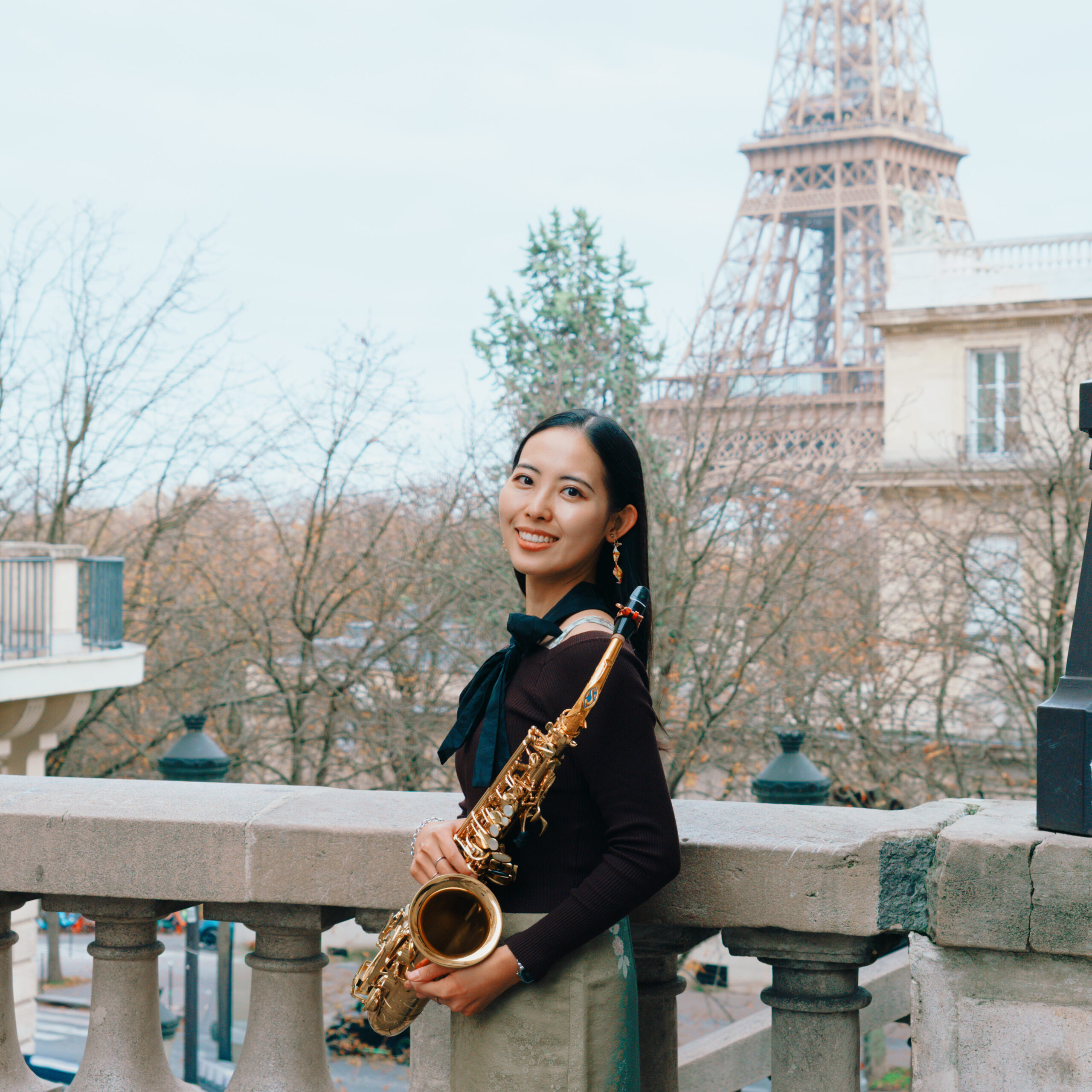
袴田 美帆 Miho Hakamada
Saxophonist / President of NPO ToriCote
After studying Arts Management at Kobe University, Miho Hakamada moved to France, where she graduated from the Saxophone, Chamber Music, and Improvisation departments of the Conservatoire National Supérieur de Musique et de Danse de Paris (CNSMDP).
She was a finalist in the 7th Adolphe Sax International Competition and was selected as a Japanese Government Agency for Cultural Affairs Overseas Study Program Fellow. She has performed internationally and appeared as a soloist with the New Japan Philharmonic.
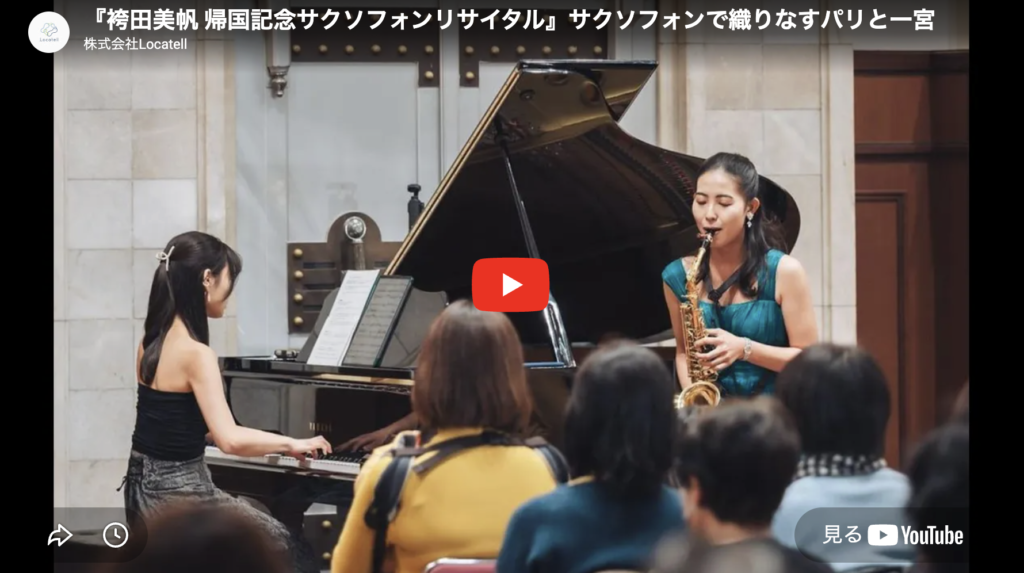
After spending approximately eight years in France, she returned to Japan in 2023. Since 2024, she has presented the recital series “Paris and Ichinomiya Woven Together Through the Saxophone.” She also organizes projects that connect her hometown with the world through concerts, international artist residencies, and community-based cultural initiatives.
Alongside her performing and teaching activities, she currently serves as President of NPO ToriCote.
Current Activities
Could you tell us about your current activities?
Hakamada:
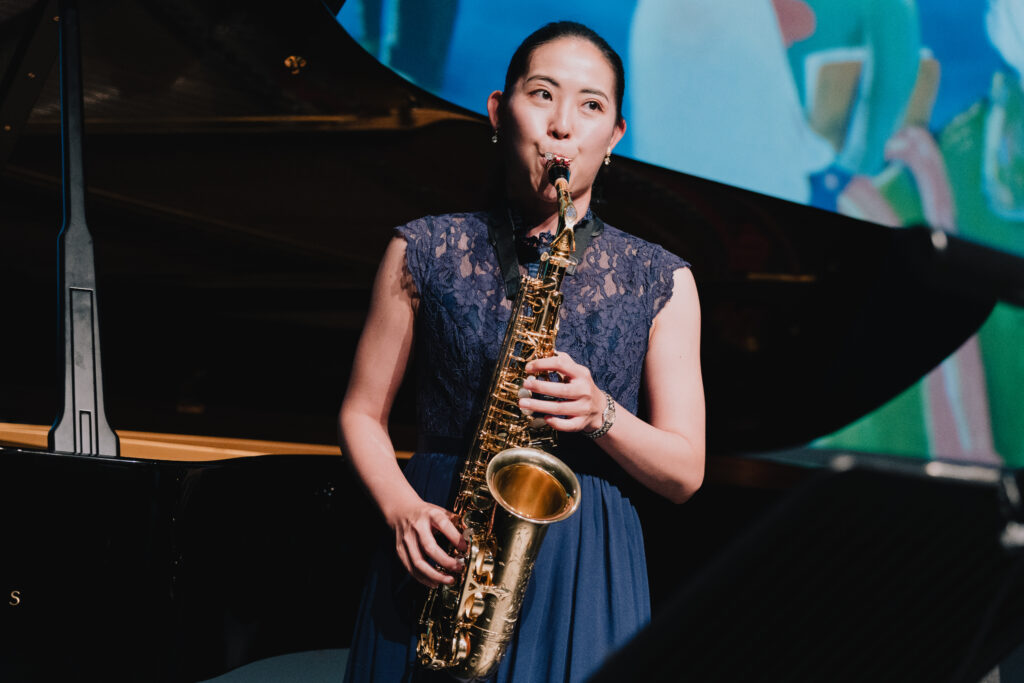
I currently work as a freelance saxophonist, performing concerts, teaching lessons, and giving lectures at schools and companies.
Since the establishment of ToriCote in October 2025, I have also been responsible for planning and managing projects related to arts and cultural promotion as the organization’s president.
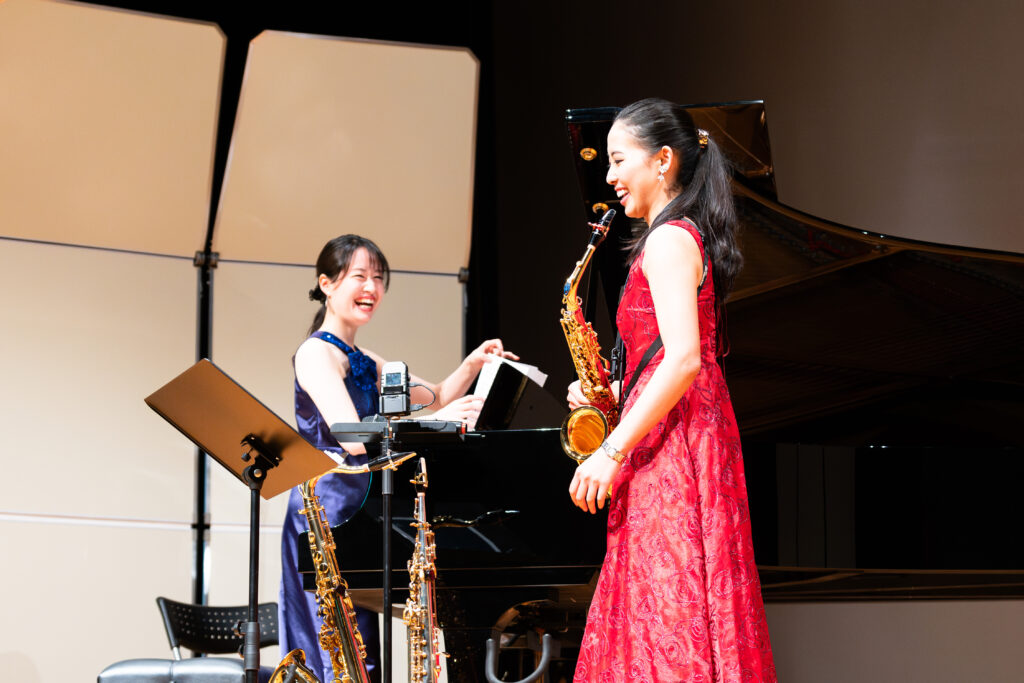
In addition, I support students pursuing music studies in France, provide interpretation services, and produce music-related events, so my activities are quite diverse.
I studied Arts Management at university and later moved to Paris, where I spent nearly eight years studying music and building my performing career.
Since returning permanently to Japan in 2023, I have been using the experiences I gained in France to organize my own concerts and actively participate in educational and community cultural projects.
At the same time, I wish to maintain my activities in France as much as possible. I still spend time there about twice a year, performing, teaching local children, and supporting Japanese students studying abroad.
Connecting Cultures Through Experiences in Paris
How has your experience in France influenced your current activities?
Hakamada:
In France, music is not limited to concert halls. People encounter music in museums, small salons, schools, local festivals, and many other places.
Seeing people of all generations—from babies to seniors—enjoying music together made me realize what it truly means for arts and culture to be part of everyday life.
I also had opportunities to perform in various regional cities throughout France. Everywhere I went, I was struck by the warmth of local communities and the pride people took in preserving their cultural heritage.
What impressed me most was how deeply people valued the culture of their own towns.
They enthusiastically shared stories about local history, traditions, and customs, and those conversations remain vivid memories for me today.
Witnessing those vibrant cultural environments inspired me to explore what kinds of cultural projects are possible specifically because they take place in regional communities. That idea has become the foundation of my current work.
Why I Decided to Return to Japan
Did those experiences influence your decision to return to Japan?
Hakamada:
Yes, absolutely.
After several years abroad, as I approached my late twenties, I began asking myself where I wanted to live and what kind of work I wanted to dedicate myself to in the future.
The answer that kept coming back was my hometown.
Living in France, where individuality is strongly encouraged, often made me think deeply about my own identity and roots as a Japanese person.
At the same time, I realized that despite being Japanese, I had never really worked in Japan. I felt frustrated that I could not confidently explain Japanese culture to people in France using my own experiences.
Watching French people take pride in their local culture made me want to learn more deeply about my own hometown and share its stories with people from around the world.
I also began dreaming of creating a place in my community where culture could connect people and continue evolving, just as I had seen in France.
That became one of the biggest reasons I decided to return to Japan.
The Cultural and Musical Potential of Ichinomiya
How has living in Paris changed the way you see the culture and charm of your hometown, Ichinomiya?
Hakamada:
The more I learn about Ichinomiya, the more I realize how many remarkable people and traditions it has that deserve international recognition.
In addition to its world-famous textile industry, there is the unique café “morning” culture, as well as creative new businesses revitalizing shopping streets and vacant buildings.
My grandparents worked in the textile industry, so weaving culture was always a familiar part of my childhood.
The café culture was also simply part of everyday life, and some of the connections that have expanded my current activities began through conversations in local cafés.
When I was younger, I never considered these things particularly special.
It was only after living in France that I began to appreciate their value.
Earlier, I mentioned how proud French people are of their local culture and history. Many artists there also express those roots through their work.
Inspired by that, I wanted to express my own roots through music.
For my graduation recital at the Paris Conservatory, I collaborated with a composer to create a work incorporating the sounds of weaving machines and traditional weaving songs from Ichinomiya.
The rhythm of the looms and recordings of my own voice singing local folk melodies became part of the piece.
Both professors and audience members were fascinated by it. After the performance, many people mentioned the name “Ichinomiya,” which made me incredibly happy.
I later performed the same work at my homecoming recital in Ichinomiya in 2024.
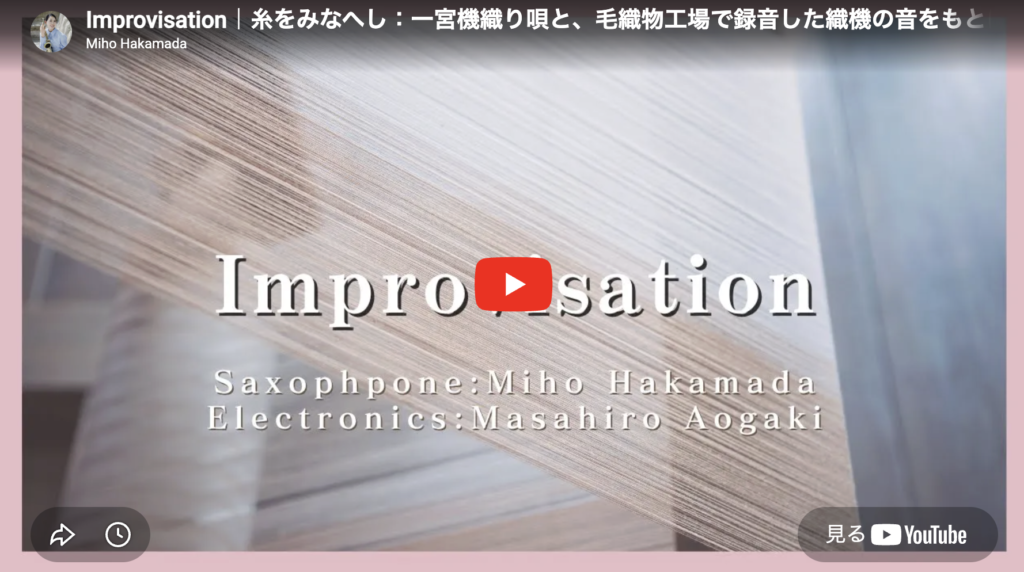
One audience member wrote in a survey, “This performance made me realize I can be more proud of Ichinomiya.”
That comment strongly reinforced my belief in the power of combining local culture with the arts.
I believe Ichinomiya still has many treasures that deserve to be shared with the world, and I hope to continue exploring new ways to communicate them through collaboration with people from various fields.
Why a Saxophonist Founded an NPO

What led you to establish an NPO while continuing your career as a saxophonist?
Hakamada:
The idea originally came from conversations with musician friends I met while studying in France. We all shared the desire to connect Japan and France through music.
As I continued performing, I gradually became more involved in organizing community events and family concerts.
However, many of these projects were organized through informal groups and often ended as one-time events.
I began to realize that even the strongest ideas are difficult to sustain without a structure that supports long-term growth.
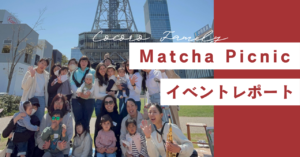
At the same time, together with Rikako Kawano and Chikako Ishigaki—who are now also board members of ToriCote—I helped establish Cocoro Family, a community group supporting international families in Ichinomiya.
As our activities expanded, it became clear that there were many opportunities, grants, and partnerships with local governments that would only be accessible through a legal organization.
Many of our musician colleagues were already involved in family-oriented projects, and we felt that combining our different strengths could create something unique.
That shared vision ultimately led to the creation of ToriCote as an NPO.
To be honest, the process was much more complicated than I had expected. Establishing the organization took considerable time, and running it continues to be a learning experience.
But precisely because it is challenging, it forces us to continuously reflect on what truly matters and grow into an organization that responds to real social needs.
NPO ToriCote: Three Core Areas of Activity

What kinds of activities does ToriCote carry out?
Hakamada:
ToriCote is built around three main pillars:
- Arts and Cultural Promotion
- Family and Parenting Support
- International Exchange
What makes ToriCote unique is the way these three areas intersect within our projects.
For example, we have invited artists from France, Taiwan, Sweden, the United States, and other countries—many of whom I met during my years abroad—to Ichinomiya for concerts and cultural events.
Rather than simply presenting performances, we also involve these artists in local festivals, children’s programs, and educational exchanges with students.
Creating opportunities for local residents to actively participate is extremely important to us.
In our family support and international exchange programs, we work closely with local governments, companies, and community organizations around themes such as multicultural inclusion and global citizenship.
Through these initiatives, we hope to create more opportunities for meaningful connections while nurturing cultural exchange that is both rooted in the local community and connected to the wider world.
The Meaning Behind the Name “ToriCote”

Where does the name “ToriCote” come from?
Hakamada:
One inspiration comes from the French word “tricoter,” meaning “to knit.”
Ichinomiya is home to Bishu, one of Japan’s most renowned textile regions. We wanted our activities to weave together people, communities, cultures, and countries, much like threads in a fabric.
We also incorporated the Japanese word “toriko” (虜), meaning “to be captivated.”
We want to create experiences that inspire excitement and curiosity—experiences that people genuinely enjoy and remember.
Our hope is that many people will become captivated by the connections and discoveries created through our activities.
The name also evokes the image of a bird (“tori”), symbolizing our desire to stay rooted in the local community while spreading our wings toward the world.
ToriCote represents a vision in which people, cultures, communities, and countries are woven together to create new relationships and possibilities.
What We Hope to Achieve Through ToriCote
What would you like to accomplish through ToriCote in the future?
Hakamada:
We want to create more opportunities for people in our community to connect with the world in enjoyable and meaningful ways.
I hope to continue developing programs that broaden children’s horizons and offer new discoveries for adults as well.
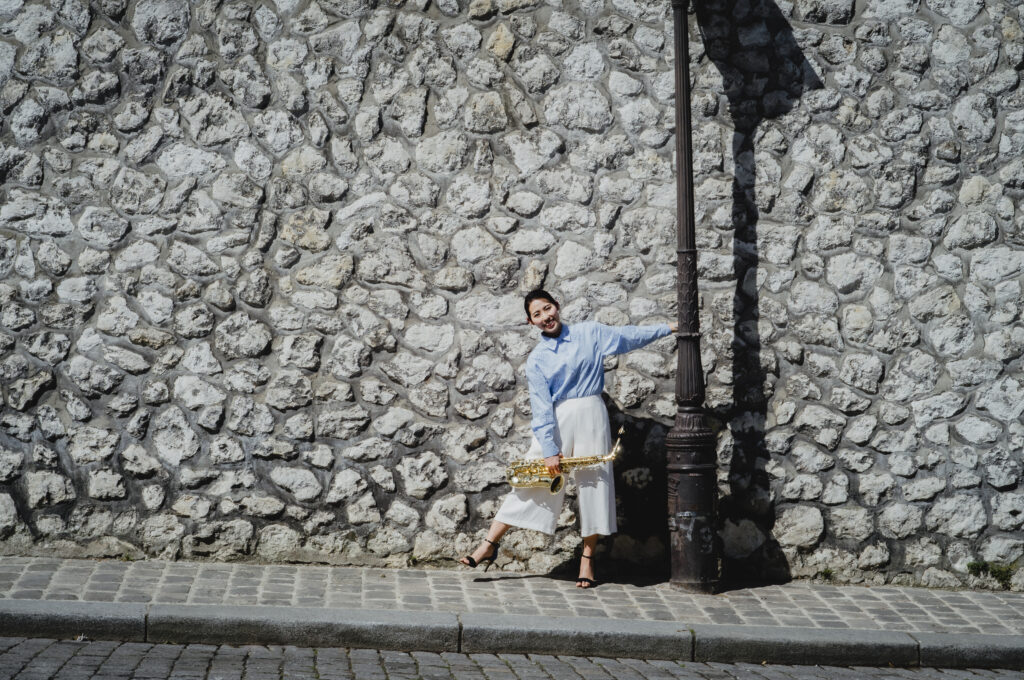
Living in France allowed me to meet people from many different countries and experience a wide range of cultures and perspectives.
Without those experiences, I don’t think my own worldview would have expanded in the way it did.
That is why I want to give back to my hometown by sharing the opportunities and insights I gained abroad.
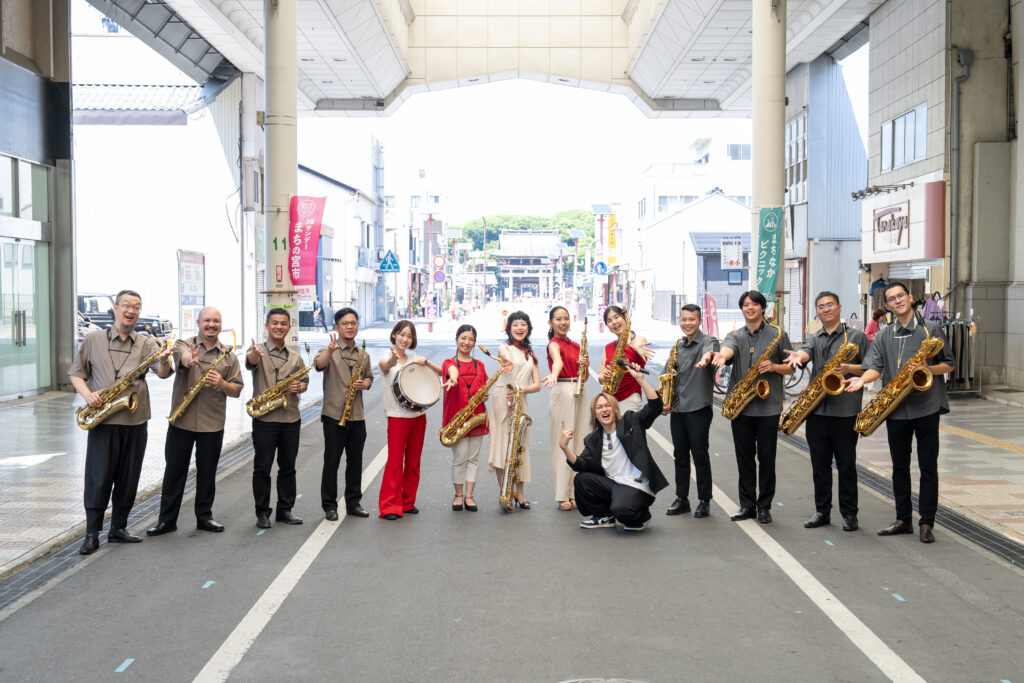
At ToriCote, our members bring expertise in fields such as the arts, childcare, languages, beauty, and wellness.
By combining those strengths, we create projects where international artists meet local residents, middle school students volunteer at community events, and families experience cultures from around the world together.
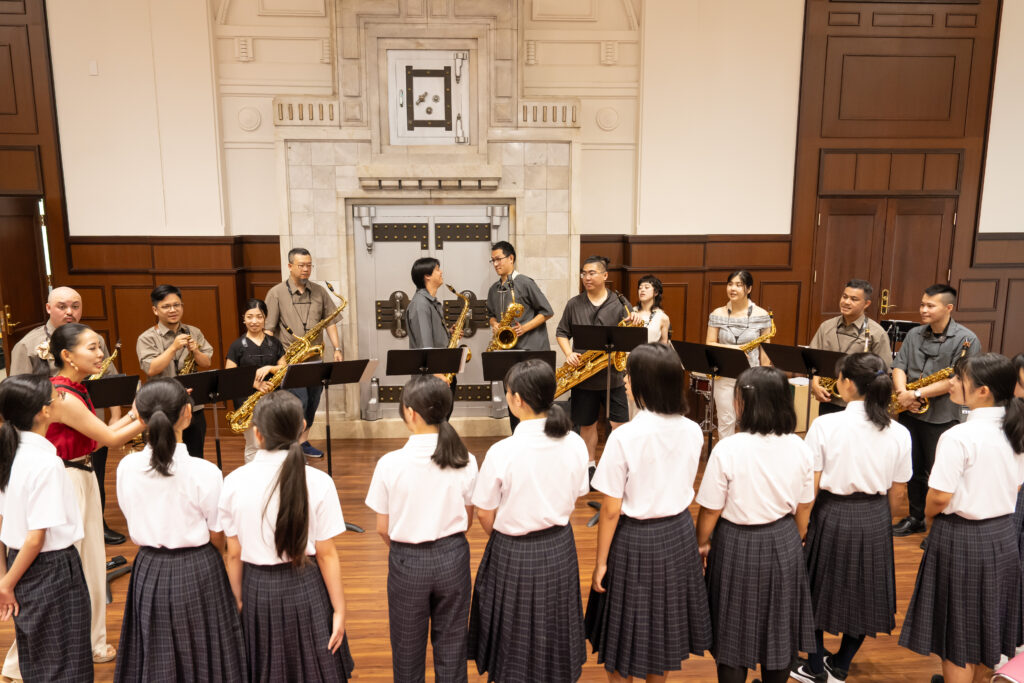
We have already witnessed many meaningful connections emerging through these interactions.
Our dream is to create a cycle in which people from around the world gather in our region, cultures meet, new cultural expressions emerge, and those ideas then spread outward again.
That is the future we hope to build through ToriCote.
A Message to Our Readers
Finally, do you have a message for our readers?
Hakamada:
Thank you very much for reading.
At ToriCote, we value creating opportunities where people can gather casually and enjoy connecting through culture and community.
Through our activities, we hope new friendships will be formed, new perspectives will be discovered, and new connections to the world will emerge.
We also hope to create an environment where children and families from international backgrounds can celebrate their own cultures, take pride in their identities, and feel at home in the community.
Step by step, we would like to continue expanding these opportunities.
If, through music and culture, more people become captivated by the experiences we create, it would make us very happy.
We hope you’ll join us at a future ToriCote event!